Pages

EDUBLOGGiNG is LEARNiNG


http://www.abeachcottage.com/wp-content/uploads/2011/10/beach-cottage-keep-calm-blogging-poster-535x625.jpg

I'm a person who hates writing research papers, reflection papers, and anything that has to do with writing or reporting in the English language because - I admit - I'm not really fluent in English.

I don’t know why, maybe I really don’t like English, hehehe. When I heard before the semester began that we need to do our own blogging, or submit our first blog, it has ruined my semester break because I didn’t know how to start.

I thought that I cannot really express what I wanted to say if my grammar is not good, and what if they don’t like my blog?

When I enrolled for my 4th year subjects, to tell you the truth, I didn’t want to enroll in CC3 because of blogging. But I didn’t have a choice because of the conflict in my schedule.

I'm not saying that I hate CC3, ok? I love CC1, CC2 and of course I like our professor VBG. She is the one of my favorite professors because she’s a good professor to us.

When I started my blogging, I needed a lot of time because I wanted that my first post was good as much as possible. I had hoped that my followers and readers could learn something from my post.

I learned for the very first time to borrow many books to read for more information, and I also learned to study about that particular topic. I felt that my first post was not good at all, so I decided and I promised to myself that my second post would be better, with a lot of information.

My second post is done and I enjoyed doing it because I felt that while doing it I learned also. Blogging is enjoyable when readers comment in your post it. It feels like a fulfillment because readers appreciate your post.

Blogging is not just posting simple words; it could help share information to others.

Thank you for reading. .. KEEP LEARNING and START YOUR BLOG J

TOC-SiiCK! THiS ALL KiLL YAH!


Adults can distinguish between reality and fantasy, so such cartoon cannot affect us badly. Most of us have more interest to watch the cartoon picture and movies because of the creativity and fun, sometimes it is the best thing to be relaxed ourselves.  But did you know that some of our favorite cartoon characters taking toxic drugs like:

Shaggy and Scooby Doo - Marijuana
420-Marijuana-Timothy-Teruo-Watters-Scooby-Doo-Where-Are-You-Art-Law-Officer

Popeye - Steroid
Popeye inspects his "spinach"

Droopy Dog - Barbiturates
The glamorous life of a prostitute.
The Roadrunner - Cocaine

That's how they get ya hooked.


Pictures Reference:
http://guyism.com/lifestyle/10-childrens-characters-who-were-definitely-on-drugs.html
http://www.cracked.com/funny-2842-beloved-cartoon-characters-drugs-they-probably-used/


WHAT is TOXICOLOGY?
  • Study of how natural or man - made poison caused undesirable effects in living organisms
  • Study of the adverse effects of chemical, physical or biological agents including the prevention of such adverse effects
  • Deals with the way chemicals and waste products affect the health of an individual
  • Is an essential development process of new drugs in the pharmaceutical industry

TERMS to TOXiC CHEMICALS

Poison - any substance that when ingested or injected within the body in small amount may, by its chemical action it can cause death or injury.
Toxicant - to denote any chemical that can potentially produce harm.
Toxin - chemicals that are produced by a living organism
Toxicity - degree to which a substance is poisonous.
Dose - actual amount of a chemical that enter's the body.
Xenobiotic - foreign to the body and any chemical that is not a natural component of the body. Any synthetic chemical that has NO beneficial in the body.


APPLiCATiON OF TOXiCOLOGY
  • Mechanistic Toxicology - make observations on how toxic substances cause their effect. Assessed the degree of exposure of poisoned individuals.
http://www.item.fraunhofer.de/en/business-fields/drug-research.html

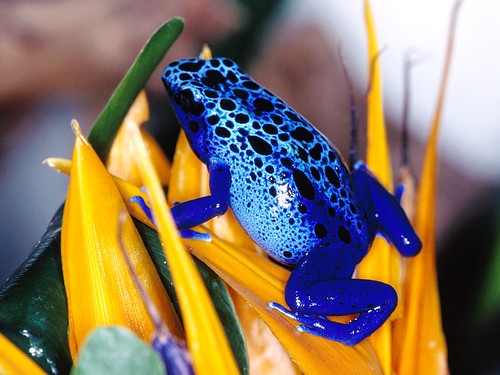
  • Descriptive Toxicology - concerned with gathering toxicological information from animal experimentation.
http://www.davesblogcentral.com/2009/02/don-get-froggy-with-these-guys-if-you.html

  • Forensic Toxicology - concerned with medicolegal consequences of toxin exposure. Validating the analytical performance of the method used to generate evidence in legal situations.
Forensic evidence
http://www.sciencephoto.com/media/200891/enlarge
  • Clinical Toxicology - concerned with illness and diseases associated with short or long term exposure to toxic chemicals
http://www.holisticpharmd.com/2012/04/01/are-toxic-metals-inside-you/
  • Environmental Toxicology - concerned with the chemicals that contaminated and toxic substances that enter bodies of water.
Sick Planet
http://www.tuberose.com/Environmental_Toxicity.html
  • Industrial Toxicology - concerned with health effects from exposure to chemicals in the workplace.


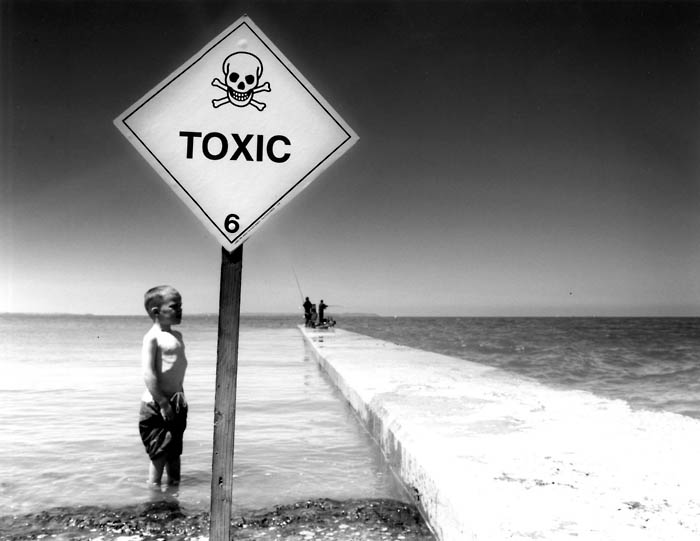
http://5election.com/2010/12/17/the-toxic-food/


ROUTES OF EXPOSURE

Absorption - chemicals can cross the skin barrier and be absorbed into the blood stream

Inhalation - chemicals are either exhaled or deposited in the respiratory tract. Chemicals form of gases, mists, particulates and vapors.

Ingestion -chemicals that get into the mouth.

Injection - skin is punctured by contaminated objects


DURATiON OF EXPOSURE

Acute Exposure - application of a single or short term (generally less than a day) dosing by a chemical

Chronic Exposure - continuous exposure to a toxin often measured in months


TOXiC EFFECT


Mutagenicity - detection of possible ability to induce genetic alteration (mutation)


Teratogenicity - any substance capable of causing malformation during the development of the fetus.


Some thalidomide babies
(left)http://pgqb.blogspot.com/2012/01/teratogenic-drugs.html and (right)http://www.chm.bris.ac.uk/motm/thalidomide/first.html
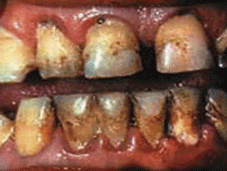
Carcinogenicity - detection of possible ability to induce abnormal clonal uncontrolled proliferation of genetically altered cells.


This is what happens when you smoke!


(left)http://freeimagesarchive.com/img15358.search.htm,(right) http://sundds.wordpress.com/2009/03/28/smoking-drinking-your-teeth-away/


TOXiCODYNAMiC what poisons may do to the body. Molecular, biochemical and physiological of toxicants or their metabolites in biological systems.

TOXiCOKINETiCS is the quantitation of the time course of toxicants in the body or clearance of toxicants. A reflection of how the body handles toxicants as indicated by the plasma concentration of xenobiotic at various time points.

Figure showing the interplay between absorption, distribution, metabolism and excretion (ADME). Taken from reference 3.
http://pharmaxchange.info/press/2011/04/pharmacokinetics-basics-absorption-distribution-metabolism-and-excretion/
Food safety and Toxicology


Drugs can be pretty if abused properly. Again, Thank you for reading my blog and I hope you learned! God Bless and Good Day JJJ

References:


iNTRODUCTiON TO ENDOCRiNOLOGY

ENDOCRINOLOGY

  • is the study of intracellular and extracellular communication by messenger molecules known as hormones. It also includes the diseases and conditions associated with hormonal imbalance, damage to the glands that make hormones, or the use of synthetic or natural hormonal drugs.
  • study of the storage, chemistry, and physiological function of hormones and the endocrine system and tissue that secrete them.

ENDOCRINE SYSTEM

  • consists of several glands that secrete hormone directly into the blood. It controls body activities by releasing chemical mediators called hormones.


Picture 1: The Endocrine System Anatomical Chart shows location of glands on the  body. This Anatomical Chart illustrates the hypothalamus, pineal, pituitary gland, parathyroid gland, thyroid gland, thymus gland, adrenal gland, pancreas, ovary and testes.

HORMONE

  • is a molecule that is released in one part of the body but regulates the activity of cells in other parts of the body. Hormones are chemical messengers and have target organs.

Functions of Hormones:
  • growth and development
  • reproduction
  • mobilization of bodily defenses
  • water and nutrient balance
  • maintenance of electrolyte
  • and the regulation of cellular metabolism


That is introduction of ENDOCRiNOLOGY i hope this information will help you. Thank you for reading my first blog. GOD BLESS  ..


Reference:

  • Picture 1:  http://www.endoatsoim.com/endocrine_system.html 
  • http://en.wikipedia.org/wiki/Endocrinology
  • http://library.thinkquest.org/16421/noframes/systems/endocrine/endocrine.htm
  • Fundamentals of clinical chemistry 4th edition by Carl A. Burtis and Edward R. Ashwood Anatomy and Physiology from Science to Life 2nd edition by Gail W. Jenkins, Christopher P. Kemnitz, Gerard T. Tortora.


Powered By Blogger